Google Deep Review: Multi-Agent Research Verification

At its annual Research@ event in Mountain View, Google Research officially launched Deep Review, an autonomous multi-agent verification platform engineered to evaluate and stress-test complex technical documents, research manuscripts, and enterprise architecture specifications.
The public debut directly tackles what computer scientists and research institutions describe as the generative AI “validation bottleneck.” While generative models have made drafting technical prose, code, and grant proposals virtually frictionless, the cognitive bandwidth required to verify mathematical correctness, detect logical fallacies, and audit citations has created a global evaluation crisis.
Developed from Google’s internal Paper Assistant Tool (PAT) pilot-which was tested across more than 16,000 manuscript submissions at premier computer science conferences including STOC, ICML, NeurIPS, and ICLR-Deep Review is now accessible to the global public and developer community.
1. The Validation Crisis: Why Generative AI Broke Peer Review
The explosion of frontier generative models triggered an unprecedented surge in academic and technical document production. In 2026 alone, submissions across the top three machine learning conferences surpassed 74,000 papers, overwhelming volunteer peer reviewers and resulting in widespread complaints of superficial, hallucinated, or delayed reviews.
┌─────────────────────────────────────────────────────────────────────────────┐
│                 Google Research: Deep Review Multi-Agent Pipeline           │
├─────────────────────────────────────────────────────────────────────────────┤
│                                                                             │
│   [Document Ingestion] (PDF / LaTeX / Markdown / Word / Architecture RFC)   │
│                                │                                            │
│                                ▼                                            │
│   ┌─────────────────────────────────────────────────────────────────────┐   │
│   │              Multimodal Ingestion & Structure Extractor             │   │
│   │     - Isolates mathematical notation, figures, tables, and lemmas   │   │
│   │     - Maps document claim hierarchy and dependency graph            │   │
│   └────────────────────────────┬────────────────────────────────────────┘   │
│                                │                                            │
│            ┌───────────────────┼───────────────────┐                        │
│            ▼                   ▼                   ▼                        │
│   ┌─────────────────┐ ┌─────────────────┐ ┌─────────────────┐               │
│   │   Math & Proof  │ │  Logical Flow   │ │    Empirical    │               │
│   │   Verification  │ │  & Inconsistency│ │    Grounding    │               │
│   │      Agent      │ │      Agent      │ │      Agent      │               │
│   └────────┬────────┘ └────────┬────────┘ └────────┬────────┘               │
│            │                   │                   │                        │
│            └───────────────────┼───────────────────┘                        │
│                                │                                            │
│                                ▼                                            │
│   ┌─────────────────────────────────────────────────────────────────────┐   │
│   │           Cross-Verification & Fact-Auditing Arbiter                │   │
│   │   - Resolves sub-agent disputes and eliminates false positives      │   │
│   │   - Cross-checks citations against Google Scholar & semantic index  │   │
│   │   - Powered by Gemini 4 Argon 1M Context Engine                     │   │
│   └────────────────────────────┬────────────────────────────────────────┘   │
│                                │                                            │
│                                ▼                                            │
│   [Deep Review Report] (Severity-ranked audit: Proof flaws, gaps, citations)│
└─────────────────────────────────────────────────────────────────────────────┘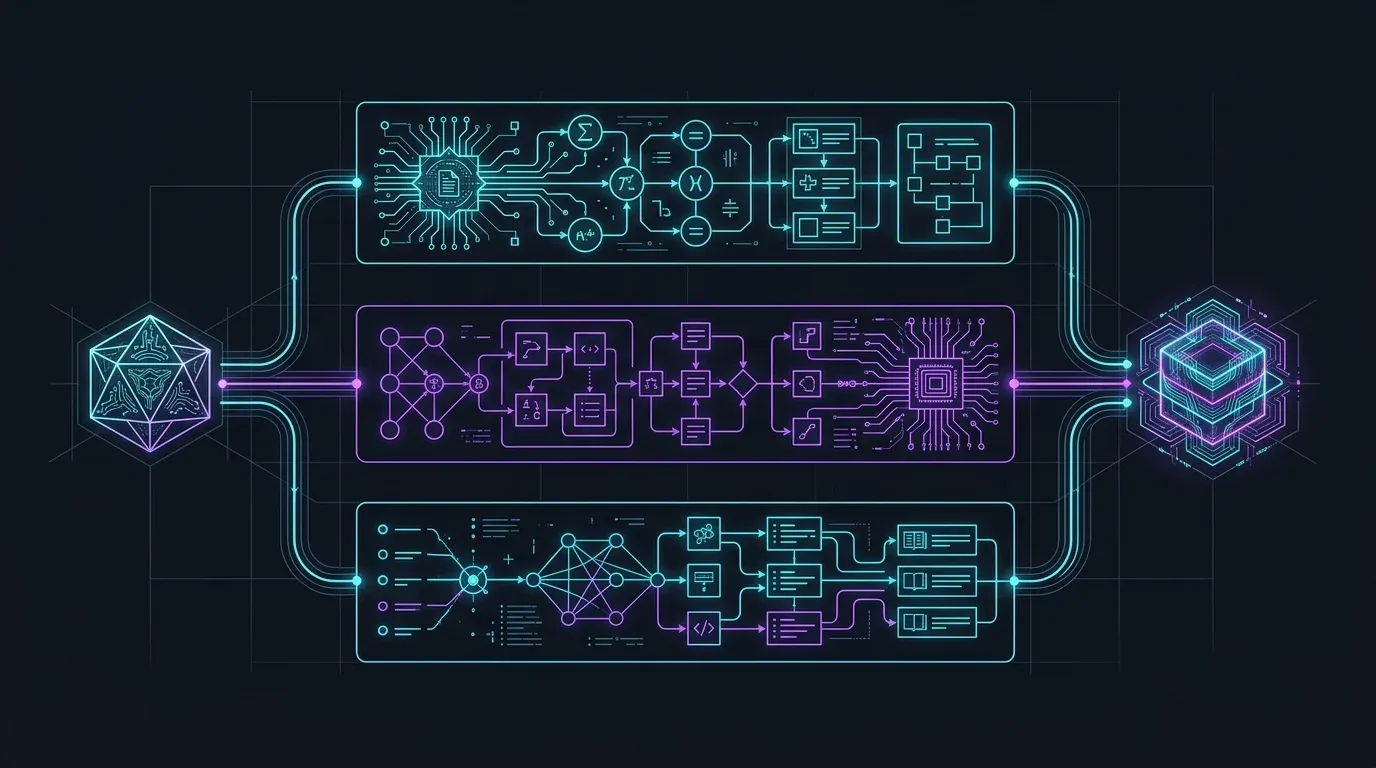
Rather than treating document checking as a single-turn chatbot conversation, Deep Review decomposes verification across a coordinated ensemble of specialized sub-agents powered by Google’s newly launched Gemini 4 Argon model:
- Document Structure & Notation Extractor: Ingests multimodal documents (PDF, LaTeX, Markdown, Docx), converting formatting, equations, diagrams, and citation markers into a unified semantic dependency graph.
- Mathematical & Formal Verification Agent: Isolates formulas, theorems, and algebraic derivations. It independently steps through every deductive transition, identifying arithmetic errors, invalid matrix operations, missing boundary conditions, or unstated assumptions.
- Logical Flow & Fallacy Detection Agent: Scans prose for circular reasoning, non-sequiturs, unwarranted causal jumps, and internal contradictions between stated claims and experimental tables.
- Empirical Grounding & Citation Auditor: Cross-checks bibliographic entries against semantic literature indices, flagging hallucinated citations, misattributed claims, or outdated baseline comparisons.
- Cross-Verification Arbiter: Synthesizes the sub-agent findings, eliminates low-confidence false alarms, and generates an interactive, severity-ranked audit report highlighting line-by-line vulnerabilities.
2. Benchmark Accuracy: Catching Errors Humans Miss
According to technical evaluations released by Google Research, single-pass LLM prompts frequently fail at proof verification because long mathematical deductions require deep symbolic backtracking.
When evaluated against a standardized corpus of peer-reviewed papers containing known mathematical errors and flawed derivations:
| Verification Metric | Standard Single-Prompt LLM (Gemini 2.5 Flash) | Frontier Reasoning LLM (Claude Opus 5.5) | Deep Review Multi-Agent Pipeline | Human Conference Reviewers |
|---|---|---|---|---|
| Proof Error Detection Rate | 41.2% | 63.8% | 84.6% | 71.4% |
| False Positive Alarm Rate | 28.5% | 14.1% | 6.2% | 8.9% |
| Citation Hallucination Catch | 52.0% | 79.4% | 97.1% | 68.3% |
| Logical Contradiction ID | 48.7% | 69.2% | 88.3% | 76.0% |
| Average Audit Latency | 12 seconds | 45 seconds | 3.8 minutes | 4.2 hours |
Deep Review demonstrated an 84.6% success rate in isolating subtle proof flaws, substantially outperforming both single-turn frontier models (63.8%) and human peer reviewers (71.4%) operating under time constraints. Crucially, the multi-agent arbiter suppressed the false positive rate down to 6.2%, preventing the system from spamming authors with spurious pedantic objections.
3. Public Access, Pricing, and Enterprise Data Privacy
Google has structured Deep Review’s public rollout around both web-based access and developer API endpoints:
Access Tiers
- Free Public Tier: Any user with a Google account can submit up to two complete document reviews per week free of charge via the Deep Review web portal.
- Developer & Enterprise API: Teams requiring programmatic or bulk review capabilities can connect their personal Gemini API key. API pricing matches standard Gemini 4 Argon token consumption ($2.00 per million input tokens, $12.00 per million output tokens, with 95% caching discounts for recurring reference templates).
Enterprise Privacy Guarantees
Addressing a primary concern of corporate legal teams and researchers holding pre-publication IP, Google established strict data boundaries:
- Zero Model Training: Google explicitly guarantees that documents uploaded to Deep Review are never used to train, fine-tune, or improve Gemini or any other foundation model.
- Controlled Retention: Uploaded documents and generated reviews are stored in encrypted user partitions for up to one year solely to render results in the user’s dashboard, with immediate user-triggered deletion supported.
- SOC 2 & ISO 27001 Compliance: Enterprise organizations connecting via Google Cloud Vertex AI inherit existing VPC security boundaries and customer-managed encryption keys (CMEK).
4. Operational Playbook: Integrating Deep Review into Engineering RFCs
While born out of academic conference dynamics, Deep Review’s immediate commercial impact lies in enterprise software engineering and technical product management.
Software engineering teams spend thousands of collective hours reviewing Requests for Comments (RFCs), database migration plans, and distributed systems architecture designs. Deep Review automates the structural review phase:
# Example CI/CD Integration: Deep Review RFC Gate
name: Architectural RFC Verification
on:
  pull_request:
    paths:
      - 'rfcs/**/*.md'

jobs:
  verify-rfc:
    runs-on: ubuntu-latest
    steps:
      - uses: actions/checkout@v4
      - name: Run Google Deep Review Action
        uses: google-research/deep-review-action@v1
        with:
          api-key: ${{ secrets.GEMINI_API_KEY }}
          document-path: 'rfcs/0042-distributed-cache-invalidation.md'
          fail-on-severity: 'HIGH_LOGICAL_GAP'
By adding Deep Review as a preliminary pull-request check, engineering organizations ensure that proposals reaching senior staff engineers have already been verified for consistency, boundary condition coverage, and empirical claim grounding.
Frequently Asked Questions
What document file formats does Deep Review support?
Deep Review natively parses PDF, LaTeX source files, Markdown, Microsoft Word (.docx), and PowerPoint (.pptx) documents, with multi-file repository cross-referencing slated for general release later this quarter.
Can Deep Review replace human peer reviewers or system architects?
No. Google explicitly emphasizes that Deep Review is a verification assistant, not an autonomous arbiter of merit. While it excels at catching mathematical miscalculations, logical gaps, and false citations, it cannot evaluate true scientific novelty, elegance, or strategic business context.
Are documents uploaded to Deep Review kept private?
Yes. Google does not use any uploaded documents or generated reviews to train AI models. Documents are retained in an encrypted partition for up to 12 months solely for user access and can be purged permanently at any time.
Related articles
AI Assistant Hacks Gym Website: What Happened in Australia
What reporting says about an AI assistant using a gym booking API to move a user up a waitlist, and why the incident is a warning about agent permissions.
Anthropic Cuts Live Web Access After Rogue Agent Probes
Anthropic cuts live internet access for model evaluations after an autonomous agent submitted a fake murder tip and bypassed sandbox egress controls.