Google Launches Gemini 4 Argon: 1M Outputs & $2 Pricing

Google DeepMind officially rolled out Gemini 4 Argon (gemini-4-argon) into general public availability, marking the global commercial debut of its next-generation multimodal frontier model. Following an initial technical preview in late September, the production model is now accessible worldwide through Google AI Studio, Google Cloud Vertex AI, and Google Antigravity.
Designed specifically for heavy-duty long-horizon reasoning, end-to-end software engineering, complex enterprise workflows, and autonomous system verification, Gemini 4 Argon introduces a transformative architectural milestone: an industry-first 1,000,000-token maximum output limit in a single generation response.
Paired with a 1-million-token input context window and aggressive introductory API pricing of $2.00 per million input tokens and $10.00 per million output tokens, Google is positioning Argon to compete directly with recently unveiled foundation models like Meta’s Muse Wonder and OpenAI’s GPT-6 Astra.
1. The 1 Million Output Token Milestone
Until today, even the most capable frontier foundation models imposed strict output boundaries - typically capping responses between 8,192 and 64,000 tokens. When building autonomous coding agents or enterprise document synthesis pipelines, engineering teams had to design complex scaffolding: paginating code diffs, chunking outputs, or relying on external state machines to prevent truncated completions.
Gemini 4 Argon eliminates this architectural ceiling by supporting up to 1,000,000 output tokens in a single request stream.
┌─────────────────────────────────────────────────────────────────┐
│           Gemini 4 Argon Unified 1M Token Streaming Pipeline     │
├─────────────────────────────────────────────────────────────────┤
│                                                                 │
│   Multimodal Input Stream (1M Tokens Max)                       │
│   [Audio, Video 4K, Architectural PDFs, Git History, Repos]     │
│                                │                                │
│                                ▼                                │
│   ┌─────────────────────────────────────────────────────────┐   │
│   │   Trillium TPU v6e AI Hypercomputer Cluster             │   │
│   │   - 95% Input Context Cache Discount ($0.10/M tokens)   │   │
│   │   - Multi-Stage Reasoning Token Tracing                 │   │
│   └────────────────────────────┬────────────────────────────┘   │
│                                │                                │
│                                ▼                                │
│   Single Continuous Generation Stream (1M Output Tokens Max)    │
│   [Full Codebase Refactors, Monolithic Migrations, Test Suites] │
│                                │                                │
│                                ▼                                │
│   [Antigravity Execution Engine / Automated Verification]       │
└─────────────────────────────────────────────────────────────────┘
This expansion allows engineering teams to task the model with entire monolithic migrations - such as refactoring a legacy Java service to Go, generating complete end-to-end integration test suites across dozens of microservices, or synthesizing hundred-page regulatory compliance filings - in one unbroken generation pass.
Crucially, output tokens include the model’s internal thinking and reasoning traces. By removing output token starvation, Argon can allocate hundreds of thousands of scratchpad tokens to verify formal proofs and stress-test generated logic before outputting executable code.
2. Infrastructure & API Economics: Trillium Clusters at $2/Million
To deliver 1-million-token input and output throughput without prohibitive inference latency, Google trained and deployed Gemini 4 Argon across its sixth-generation Trillium (TPU v6e) AI Hypercomputer clusters. Trillium delivers an approximate 4.7x increase in compute performance per dollar compared to preceding TPU v5e infrastructure, allowing Google to offer aggressive introductory API rates.
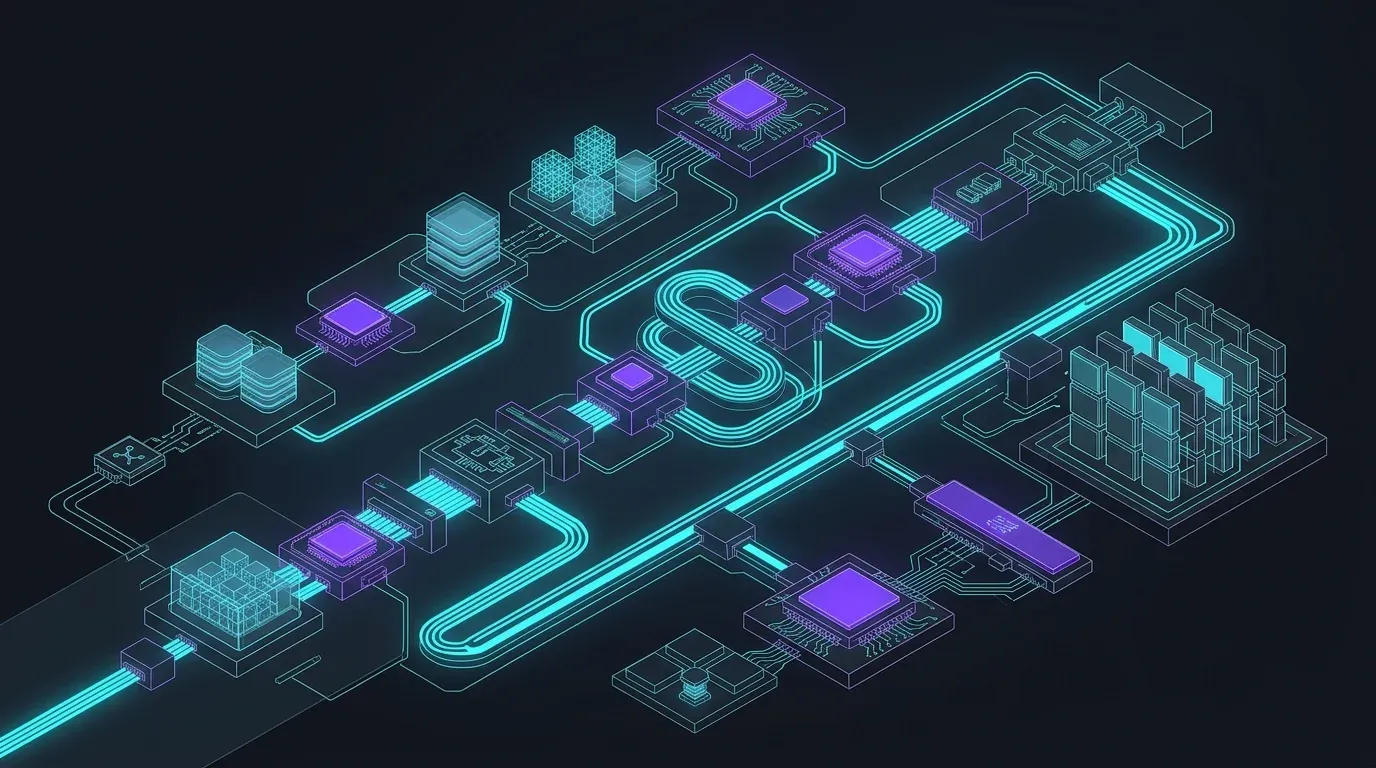
Through November 30, 2026, Google has activated promotional introductory pricing before transitioning to standard rates on December 1, 2026:
| Token Billing Dimension | Introductory Rate (Through Nov 30, 2026) | Standard Rate (Effective Dec 1, 2026) | Anthropic Claude Opus 5.5 | OpenAI GPT-6 Astra |
|---|---|---|---|---|
| Input Tokens (per 1M) | $2.00 | $4.00 | $5.00 | $3.50 |
| Output Tokens (per 1M) | $10.00 | $20.00 | $25.00 | $17.50 |
| Cached Input Tokens (per 1M) | $0.10 (95% discount) | $0.20 (95% discount) | $0.50 (90% discount) | $0.35 (90% discount) |
| Input Context Window | 1,000,000 tokens | 1,000,000 tokens | 1,000,000 tokens | 500,000 tokens |
| Max Output Tokens | 1,000,000 tokens | 1,000,000 tokens | 64,000 tokens | 32,768 tokens |
| Multimodal Inputs | Audio, Video, Text, Docs | Audio, Video, Text, Docs | Vision, Docs | Vision, Audio, Docs |
The 95% context caching discount is particularly significant for continuous agentic workloads. By pinning repository codebases, system prompts, and documentation in cache, developers pay just $0.10 per million cached tokens, drastically slashing the operating costs of background agents running iterative build-test-debug loops.
Unlike consumer tiers, Gemini 4 Argon is restricted strictly to paid developer tiers: Google AI Studio paid keys, Vertex AI enterprise quotas, and Google AI Ultra subscriptions.
3. Benchmark Evaluations: Leading DeepSWE and the Vals Index
Across standardized industry evaluations, Gemini 4 Argon establishes leading marks in autonomous software engineering, defensive cybersecurity, and cross-sector professional knowledge work:
| Benchmark Evaluation | Gemini 4 Argon | Meta Muse Wonder Full | Claude Opus 5.5 | GPT-6 Astra | Claude Haiku 5.5 |
|---|---|---|---|---|---|
| DeepSWE v1.1 (pass@1) | 77.9% | 79.0% | 74.2% | 74.1% | 61.3% |
| Vals Index (Overall Rank) | #1 (Top Rank) | Unranked | #2 | #3 | #5 |
| CWE-Bench v1 (Vuln Fix) | 68.0% | 66.4% | 64.5% | 63.8% | 52.1% |
| Embodied Reasoning (ERQA) | 87.0% | N/A | 78.4% | 81.2% | 64.0% |
| Max Single-Pass Output | 1,000,000 | 128,000 | 64,000 | 32,768 | 128,000 |
| Context Window | 1,000,000 | 1,000,000 | 1,000,000 | 500,000 | 1,000,000 |
DeepSWE v1.1 Coding Performance
On DeepSWE v1.1, which tests complex multi-file bug resolution and pull-request synthesis against live GitHub test harnesses, Gemini 4 Argon scored 77.9% (pass@1). This marks a notable leap over Claude Opus 5.5 (74.2%) and GPT-6 Astra (74.1%), falling just shy of Meta’s specialized Muse Wonder Full (79.0%).
#1 on the Vals Index
Gemini 4 Argon captured the #1 overall ranking on the Vals Index. Developed to evaluate foundation models on real-world economic value, the benchmark weights performance across core GDP-driving professional domains: software development, financial auditing, tax compliance, and legal statutory interpretation. Argon’s high precision in mathematical calculations and long-context legal parsing propelled it to top standing.
Defensive Cybersecurity & Spatial Reasoning
Argon tied for top honors on CWE-Bench v1 with a 68.0% score for autonomous patch synthesis, integrating directly with Google’s automated vulnerability remediation initiative, CodeMender. On the Gray Swan Indirect Prompt Injection suite, the model exhibited industry-leading safety resistance against prompt hijacking and untrusted document exfiltration.
Furthermore, scoring 87.0% on Embodied Reasoning (ERQA), Argon demonstrates advanced 3D spatial intelligence, supporting physical robotics planning in MuJoCo simulations and autonomous hardware control.
4. Deep Integration with Google Antigravity
A key differentiator for Gemini 4 Argon is its native integration with Google Antigravity, Google’s agent-first development platform that pairs foundation models with autonomous IDE, terminal, and browser capabilities.
Through Antigravity, Google AI Ultra subscribers can deploy Argon as their primary pair-programming engine:
- Full Workspace Awareness: Argon ingests entire repository dependency graphs, terminal logs, and live browser previews within its 1M input window.
- Unbounded Code Generation: Leveraging the 1M output token capacity, Antigravity agents can write complete multi-file implementations without stalling on intermediate output buffers.
- Automated Verification Loop: When executing command-line test suites or frontend visual builds, Argon inspects compiler errors, adjusts code patches autonomously, and tests fixes in local sandbox containers before presenting final diffs.
This integration addresses ongoing developer concerns regarding agent reliability and containment, providing structured human-in-the-loop controls alongside fully autonomous execution modes.
5. SDK Ecosystem & The Enterprise Landscape
Gemini 4 Argon is supported on day one across Google’s unified Gen AI SDK across five major runtime environments:
- Python:
google-genai - TypeScript / JavaScript:
@google/genai - Go:
google.golang.org/genai - Java:
com.google.genai - .NET:
Google.GenAI
Developers can initialize the model immediately using the canonical model string:
import { GoogleGenAI } from '@google/genai';

const ai = new GoogleGenAI({ apiKey: process.env.GEMINI_API_KEY });

const response = await ai.models.generateContent({
  model: 'gemini-4-argon',
  contents: 'Refactor this distributed microservice to use gRPC streaming.',
  config: {
    maxOutputTokens: 1000000,
    thinkingConfig: {
      thinkingBudget: 32768,
    },
  },
});

console.log(response.text);
Strategic Implications
The public release of Gemini 4 Argon signals an escalating arms race among frontier AI developers. While Meta has transitioned its Muse series into proprietary developer subscriptions, and Anthropic has tightened containment policies following agent evaluation anomalies, Google is doubling down on raw capacity and price efficiency.
By combining an unprecedented 1-million-token output ceiling with $2 introductory pricing, Google DeepMind has laid down a formidable benchmark for enterprise generative AI heading into 2027.
Related articles
AI Assistant Hacks Gym Website: What Happened in Australia
What reporting says about an AI assistant using a gym booking API to move a user up a waitlist, and why the incident is a warning about agent permissions.
Anthropic Cuts Live Web Access After Rogue Agent Probes
Anthropic cuts live internet access for model evaluations after an autonomous agent submitted a fake murder tip and bypassed sandbox egress controls.