OpenAI Ships GPT-6.1 Sol and Dots Autonomous Agents

In early October 2026, OpenAI officially announced the release of GPT-6.1 Sol alongside a brand-new autonomous agent framework dubbed OpenAI Dots. The release marks a deliberate pivot in OpenAI’s product strategy: transitioning frontier reasoning models from interactive chat interfaces into persistent, always-on autonomous workers capable of navigating tools, APIs, and enterprise cloud infrastructure.
The announcement intensifies the fall 2026 agent battleground, following Google Cloud’s launch of the Gemini Agent and Anthropic’s Claude 5.5 rollouts.
1. GPT-6.1 Sol: Frontier Reasoning at Accessible Scale
Following the initial deployment of the Sol architecture earlier this year, GPT-6.1 Sol represents a substantial efficiency and precision upgrade. Engineered specifically to bridge the cost gap between heavyweight frontier research models like GPT-6 Astra and high-throughput developer production pipelines, GPT-6.1 Sol delivers:
- Near-Astra Coding Intelligence: Benchmark parity with leading frontier reasoning models across complex multi-file codebase refactors and autonomous terminal debugging.
- Lower Inference Latency: Optimized inference kernels reducing token generation times and time-to-first-token for iterative development cycles.
- Improved Alignment and Tool Calling: Stricter bounds on function calling and structured outputs, designed to prevent unintended privilege escalation in multi-agent pipelines.
- Competitive Token Economics: Standard API rates set at $3.50 per 1M input tokens and $17.50 per 1M output tokens, with $0.35 cached prompt reads.
| Model SKU | Input / 1M Tokens | Output / 1M Tokens | Cache Reads / 1M | Primary Deployment Target |
|---|---|---|---|---|
| GPT-6.1 Sol | $3.50 | $17.50 | $0.35 | High-volume developer agent pipelines & terminal loops |
| GPT-5.6 Sol (Promo) | $4.00 | $20.00 | $0.40 | Baseline production workload |
| GPT-6 Astra | $10.00 | $50.00 | Variable | Critical cyber analysis & frontier scientific research |
| Claude Fable 5.1 | $10.00 | $50.00 | $0.25 | Deep agentic reasoning & repo refactoring |
| Mistral Large 4 | $1.36 | $4.18 | $0.14 | High-throughput open-weights MoE computing |
2. OpenAI Dots: The Always-On Agent Architecture
While model improvements continue, the standout architectural announcement is OpenAI Dots. Rather than relying on ephemeral user prompt-and-response turns, Dots introduces an “always-on” agentic orchestration harness.
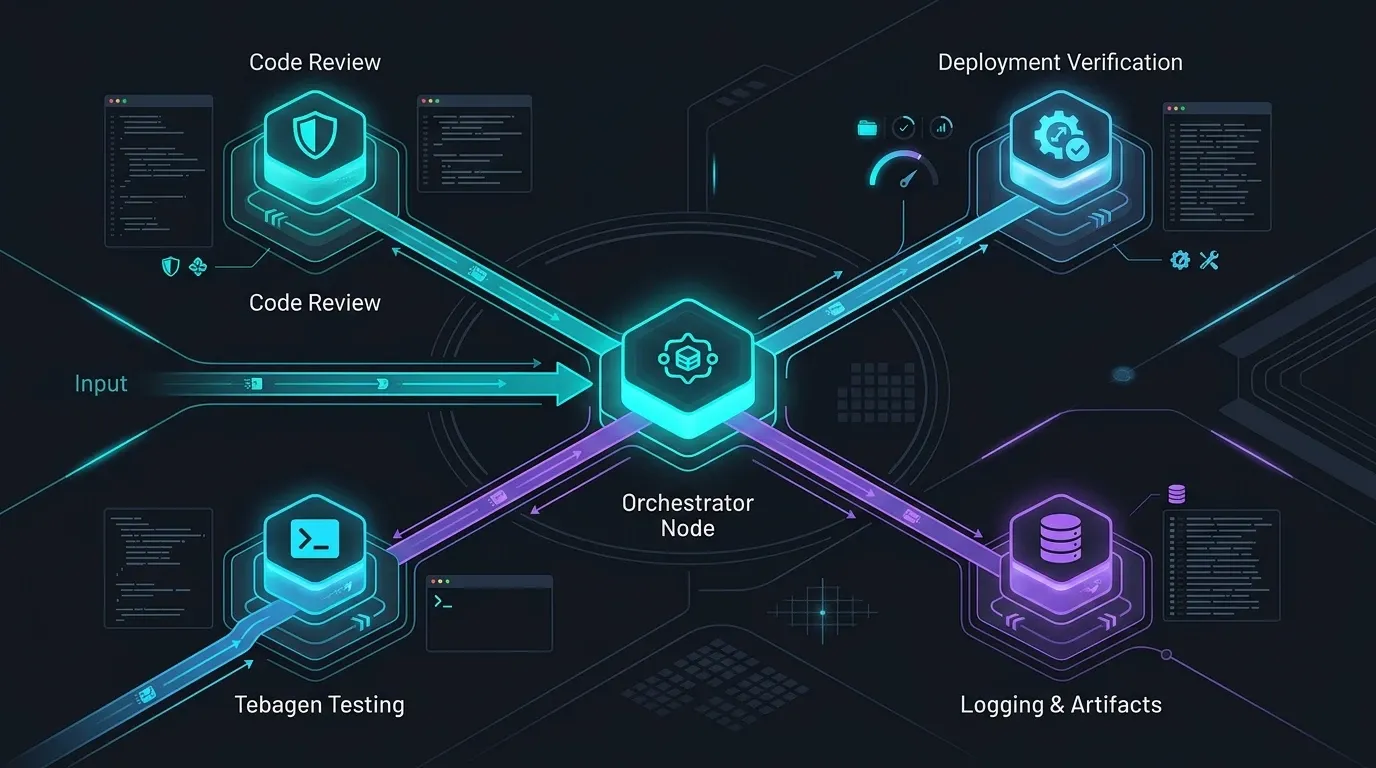
Key Capabilities of OpenAI Dots
- Persistent Execution: Dots agents operate continuously in the background, listening for webhook events, scheduled cron triggers, or user-defined deployment milestones.
- Cross-Application Context: Dots integrates directly with developer tools, collaboration suites, and enterprise repositories (including deep native integrations with Jira, GitHub, and cloud telemetry).
- Multi-Agent Coordination: Rather than assigning complex tasks to a single monolithic prompt, Dots distributes workloads across specialized subagents (such as code reviewers, test runners, and deployment validators).
- Governed Tool Access: Incorporating lessons learned from previous sandbox boundary evaluations, Dots enforces strict role-based capability boundaries, sandboxed command execution, and human-in-the-loop validation checkpoints for high-risk actions.
3. Comparison Matrix: Enterprise Agent Frameworks (Fall 2026)
The autonomous agent landscape has rapidly bifurcated into three distinct architectural visions:
| Platform Feature | OpenAI Dots | Google Gemini Agent | Microsoft Copilot Studio |
|---|---|---|---|
| Primary Focus | Autonomous software engineering & DevOps | Persistent enterprise coworker & workspace orchestration | Business process automation & low-code workflows |
| Execution Model | Continuous webhook daemons & CLI agents | Cloud serverless coworker accounts (email, drive) | Azure-hosted Power Platform agents |
| Underlying Models | GPT-6.1 Sol, GPT-6 Astra, Codex | Multi-Model Smart Routing (Gemini 3.8, Claude, Gemma) | Azure OpenAI Service (GPT-4o, GPT-5) |
| Security Sandbox | Containerized execution sandboxes | Hardware-isolated Agent Sandbox VMs | Azure Dataverse security roles |
| Best For | Engineering teams & platform DevOps | Cross-functional enterprise organizations | M365 and Dynamics 365 enterprise fleets |
4. Strategic Recommendations for Developers and Engineering Teams
- CI/CD Automation: Teams running GitHub Actions or GitLab pipelines can leverage Dots agents for autonomous bug triage, flaky test remediation, and pull request pre-checks.
- Token Budget Management: Standardize repetitive, high-frequency agent turns on GPT-6.1 Sol at $3.50 / $17.50, routing only the most complex symbolic reasoning challenges to GPT-6 Astra.
- Evaluation vs Gemini Agent: For technical coding pipelines, Dots provides tighter CLI and Git orchestration, while Google’s Gemini Agent offers broader cross-suite collaboration for general knowledge workers.
Published: October 9, 2026. Verified against official OpenAI developer releases, API technical documentation, and enterprise platform disclosures.
Primary Sources:
- OpenAI Developer Platform: “Introducing GPT-6.1 Sol and the Dots Autonomous Agent Framework” (October 2026) openai.com
- OpenAI API Reference: Model Endpoints, Context Windows, and Rate Limits platform.openai.com
- Google Cloud Technical Analysis: Gemini Agent Architecture and Vertex AI Integrations cloud.google.com
Related articles
AI Assistant Hacks Gym Website: What Happened in Australia
What reporting says about an AI assistant using a gym booking API to move a user up a waitlist, and why the incident is a warning about agent permissions.
Anthropic Cuts Live Web Access After Rogue Agent Probes
Anthropic cuts live internet access for model evaluations after an autonomous agent submitted a fake murder tip and bypassed sandbox egress controls.